Small bonsai pots dry at different speeds, while Pune’s summer heat, monsoon rain, terrace exposure and water quality can make one fixed sprinkler schedule unreliable. You will be able to match delivery method, zone design, flow, pressure and seasonal controls to your pots, then test whether every container receives enough water without staying saturated.
Key takeaways
- Suspend irrigation during measured monsoon rainfall and inspect drainage after each storm.
- Use individual drip emitters for varied pot sizes and micro-sprinklers for uniform bench coverage.
- Size emitters and pumps from flow demand, pressure loss and the longest pipe run.
- Check every cycle for blocked emitters, dry pots, runoff and overspray onto foliage.
How Pune weather changes bonsai irrigation decisions
Pune’s southwest monsoon and hot, dry intervals demand a variable irrigation design, not one year-round timer. During monsoon, rain-suspend control and good drainage matter; outside it, terrace heat, wind and reflected wall heat can dry shallow pots rapidly. Water restrictions also favour targeted delivery over routine overhead spraying.
Separate irrigation zones for:
- Full-sun benches
- Shaded benches
- Recently repotted plants
- Established bonsai
- Larger pre-bonsai containers
A newly transplanted plant needs localized, frequent moisture until roots re-establish. Field-grown or larger-container pre-bonsai plants in Pune need deeper applications than finished bonsai, while a small pot can become waterlogged after the same cycle.
Drip is usually the efficient baseline, but one outlet per pot is not a rule. Fast-draining substrate may need two emission points; a dense mix needs a smaller outlet or longer interval.
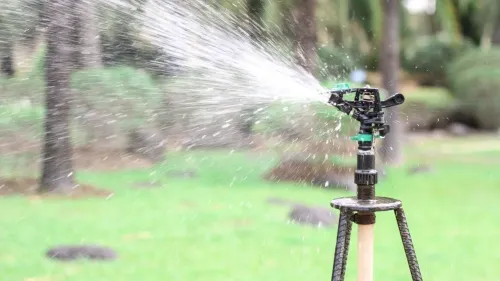
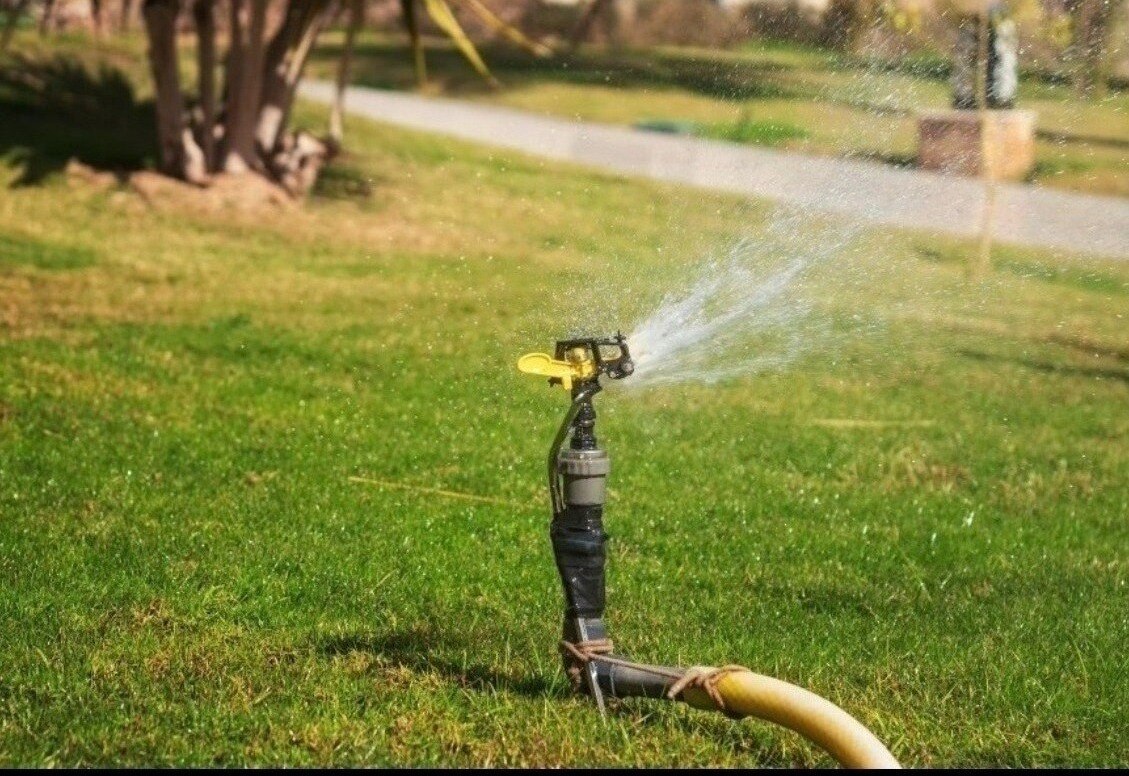
Overhead sprinklers are poor primary irrigation for mixed bonsai plants in Pune because they wet foliage, increase evaporation and splash, and distribute water unevenly. Reserve them for cooling, propagation, or uniform groups.
Before choosing equipment, test irrigation water for electrical conductivity, pH, alkalinity, sodium, chloride, and suspended solids. Salt or carbonate deposits damage shallow-root conditions and clog emitters, so filtration and treatment must follow the test result and species tolerance.
Choosing between drip, micro-sprinklers and overhead spray
One emitter per pot is not a design rule. Fast-draining bonsai substrate can stay dry between outlets, while an oversized emitter can keep a small, dense-mix pot saturated.
| Method | Best fit | Main risk |
|---|---|---|
| Drip emitters or spray stakes | Established bonsai on orderly benches; small pots with one or two measured outlets | Uneven wetting in porous mix; blockage or salt buildup at the outlet |
| Micro-sprinklers | Groups of similarly sized pots, pre-bonsai batches, and short cooling cycles | Bench edges and foliage create dry pockets; excess wetting raises evaporation |
| Overhead spray | Propagation areas, cooling, or large groups with matching containers | Wet foliage and benches, splash dispersal, and sharply different moisture levels between pots |
Drip is usually the most water-efficient choice for established bonsai, but place two emission points on a wide or very free-draining rootball. Use a lower-flow emitter for a shallow pot containing a water-retentive mix.
Micro-sprinklers suit a production bench when many small pots need broad, even coverage. Test the actual nozzle radius on the bench; a nominal pattern fails where foliage blocks the spray or the bench edge receives less water.
A sprinkler system for bonsai should separate full-sun benches, shaded benches, recently repotted plants, larger-container pre-bonsai, and established trees. A bonsai nursery in Pune that runs every zone together will overwater shade-grown pots while sun-exposed containers dry out. Test water for electrical conductivity, pH, alkalinity, sodium, chloride, and suspended solids before committing to emitters.
Sizing emitters, pipework, pressure and pump capacity
Count outlets by watering demand, not by pot count alone. A fast-draining bonsai pot may need two 2-litre-per-hour emitters; a small pot with a dense mix may need one 1-litre-per-hour emitter.
For a garden sprinkler system for bonsai and pre-bonsai in Pune, separate full-sun benches, shaded benches, recently repotted plants and larger pre-bonsai containers into zones.
- Required flow = outlets operating together × emitter flow. Fifty pots with one 2 L/h emitter each require 100 L/h, or 1.67 L/min. Add 15–20% for flushing and leakage, giving a design flow near 2 L/min.
- Select pipe by internal diameter and friction loss at that flow. Keep velocity near or below 1 m/s; use a larger mainline when a long run, many bends, filter or elevation increases loss. Size laterals so the last outlet receives nearly the same pressure as the first.
- Set operating pressure at the emitter, after the filter and regulator. Drip systems commonly need about 1–1.5 bar; micro-sprinklers often need 1.5–2.5 bar. Confirm the manufacturer’s range.
- Choose a pump from its curve at the design flow and total dynamic head: emitter pressure plus filter, valve, pipe-friction and elevation losses. A pump delivering the advertised flow only at zero pressure will produce weak end outlets.
Compare measured discharge at the first and last outlets, especially with non-pressure-compensating emitters. New Garden Guru Farms & Nursery can help match containers and plants to a zone plan; record each zone’s outlet count and measured flow before buying the pump.
Related product
 | Plants Welcome to our collection of exquisite Bonsai and Pre-Bonsai trees. View product → |
Designing delivery patterns for mixed bonsai benches
Arrange outlets in overlapping coverage bands, not in one line down the bench. Place an outlet near each exposed edge and stagger outlets between pot rows so foliage does not shield the centre while edge pots receive excess spray.
Divide mixed benches into zones by drying rate:
- Full-sun benches: use shorter laterals and closer outlet spacing because heat and reflected terrace surfaces dry edge pots quickly.
- Shaded benches: keep them separate; matching the sunny bench’s run time can saturate the inner row.
- Newly repotted bonsai: give each vulnerable group localized outlets until roots occupy the new medium.
- Pre-bonsai plants in Pune: zone larger containers separately from small finished bonsai pots. Their deeper mix needs a longer application, while small pots can run off before the root ball is wetted.
- Established bonsai: group similar pot diameters together so one outlet does not serve a shallow tray beside a deep training container.
Use pressure-compensating emitters on long or elevated laterals, then measure discharge at the first and last outlet. A nominal flow rate does not prove uniform delivery.
Avoid making overhead spray the primary pattern for bonsai plants in Pune. Dense foliage can block water, and splash onto paths wastes water. After installation, place catch cans across corners, centre rows and beneath foliage, then inspect every pot for dry pockets, runoff and overspray. Move outlets before increasing total run time.
Setting seasonal programs and checking every irrigation cycle
A garden sprinkler system for bonsai and pre-bonsai in Pune needs separate controller programs, not one year-round schedule. Give small finished pots short, frequent applications; give larger pre-bonsai containers deeper applications with longer drying intervals. Newly transplanted plants need a temporary local cycle until roots re-establish.
- March to May: increase cycle frequency during hot, dry weeks, using shorter repeat cycles for shallow pots. Extend duration only when the root ball remains dry below the surface.
- June to September: use a rain-suspend sensor and pause irrigation after useful rainfall. Restart when pots drain and begin drying, rather than when the calendar says so.
- October to February: reduce frequency as temperatures and evaporation fall. Keep duration long enough to wet the full root zone, then confirm drainage.
A bonsai nursery in Pune should verify every scheduled run at the benches, not just trust the controller display.
- Place catch cups at the near end, centre and far end of each zone; compare collected depth after a cycle.
- Check that every emitter or nozzle produces water, with no blocked filter, kinked lateral or weak end-of-line flow.
- Lift sample pots after watering: water should drain freely, not remain pooled or leave the mix saturated for prolonged periods.
- Inspect runoff for white crusts and test irrigation water for electrical conductivity, pH, alkalinity, sodium and chloride. Apply controlled leaching only when salt buildup or test results justify it.
Frequently asked questions
How does Pune weather affect bonsai irrigation?
Pune’s southwest monsoon calls for rain-suspend control and reliable drainage, while hot, dry intervals require checks for rapid drying from terrace heat, wind and reflected wall heat.
Which irrigation method suits bonsai and pre-bonsai?
Drip emitters suit mixed pot sizes and targeted watering, micro-sprinklers suit grouped benches, and overhead spray is best limited when foliage wetting, evaporation or water restrictions create problems.
How do you size a bonsai irrigation system?
Calculate the total emitter flow on each zone, account for pipe and filter pressure loss, then select a pump that meets the required flow and operating pressure at the farthest outlet.
How should irrigation be arranged for mixed bonsai benches?
Group pots with similar water needs, use adjustable or separate emitters for different pot sizes, and test the wetting pattern at the bench edges and centre.
How often should a bonsai sprinkler system be checked?
Inspect every irrigation cycle for blocked emitters, leaks, runoff, dry pots, overspray and changes caused by rainfall, wind or seasonal heat.