A PVC-handle transplanter is designed to place seedlings with an intact root plug, not to measure and bury loose seed at a consistent depth. You will learn when it can assist seed production, how to move plugs without root damage, and when a dibber, trowel, or seeder is the better choice.
Key takeaways
- Use a transplanter for rooted plugs, not for metering loose seed.
- Keep the seedling crown level with the soil surface.
- Set seed depth and spacing before making planting holes.
- Wash, dry, and store the tool under cover after use.
Decide whether you are planting loose seed or a raised plug
A PVC-handle transplanter suits a raised plug, not loose seed. It makes or enlarges a planting hole and positions an existing seedling; it does not meter seed, set sowing depth, or reliably close a furrow.
| Task | Is the transplanter suitable? | Correct tool or sequence |
|---|---|---|
| Direct sowing | No | Use a seed drill, dibber, or finger-made hole |
| Pricking out | Only with a cohesive plug | Lift and move the rooted seedling |
| Plug transplanting | Yes | Match the hole to the plug |
| Making individual holes | Yes | Use it for repeated, plug-sized holes |
Sow garden seeds in a tray or nursery bed, raise a cohesive plug, then use the transplanter to move it. The root medium must hold together; if it falls away, the seedling is not ready for this tool.
A dibber makes narrow holes. A hand trowel opens wider cavities for large plugs or root balls, a seed drill meters seed in rows, and a dibbling board creates several uniform holes. For a small batch, your finger often makes a better shallow hole than a plug transplanter.
Do not drop loose seeds into a plug-sized hole. They often settle too deep and lose firm soil contact, causing uneven or failed emergence. Use the transplanter for an existing seedling, not as a substitute for a precision seeder.
Move a rooted plug into prepared soil without burying the crown
A rooted plug is ready when its growing medium stays together around the roots. Harden seedlings gradually by increasing outdoor exposure to sun and wind over several days; moving tender plants straight outdoors can cause wilting and leaf scorch.
- Moisten the prepared bed until it holds a hole without smearing. Saturated soil creates glazed sides that restrict root growth; dry soil lets the hole collapse and accelerates drying around the plug.
- Check each seedling before continuing. Delay planting if it is wilting, has scorched leaves, sheds loose medium, or shows exposed roots. A plug that falls apart needs better moisture management or more root development.
- Hold the seedling by its leaves or root-ball area, never the stem. Stem damage can interrupt water movement even when crushing is not immediately visible.
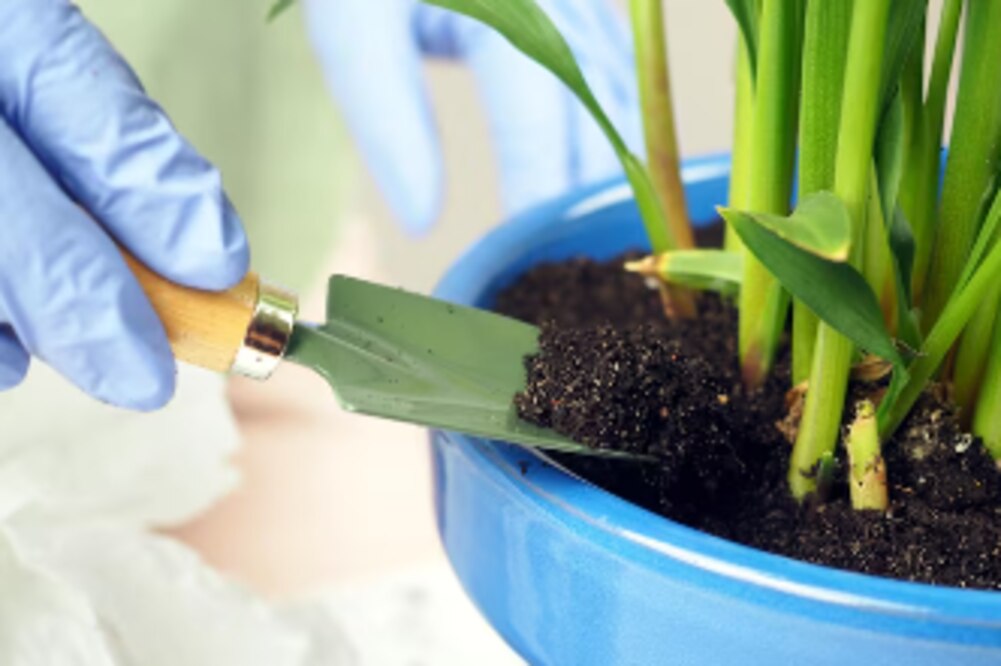
- Press the PVC handle transplanter blade into the bed to make a hole equal to the plug’s depth and diameter. A hole that is too narrow bends roots; one that is too deep buries the crown.
- Set the plug at its original level. Keep the crown, or growing point, above the surrounding soil so excess moisture does not cause stem rot, while avoiding a shallow planting that leaves roots exposed.
- Firm soil around the roots to remove air gaps without crushing the plug. Irrigate immediately, wetting the root zone thoroughly and settling soil around the transplant.
This is the reliable sequence for planting seeds with a transplanter: raise the seeds into cohesive plugs first, then move each plug into its prepared hole.
Set seed depth, spacing, and thinning before you make holes
Follow the seed packet’s sowing depth before using a transplanter. If no depth is printed, cover the seed with soil equal to about two to three times its greatest diameter.
1. Check the seed size before making holes. Dust-like garden seeds may need surface sowing or only a light covering, so a deep, plug-sized transplanter hole is unsuitable. Do not drop several seeds into one deep cavity; emergence will be uneven and seedlings will compete.
2. Set spacing from the mature plant’s requirements, not from the seed’s small size. Mark each position with a ruler, taut cord, or dibbling board, then make only the shallow hole needed for direct sowing or the deeper hole needed for a later plug.
3. Place the seed at the measured depth and cover it with fine soil or screened growing medium. Avoid a thick layer that blocks emergence, and do not compress wet soil around the seed because it seals the surface and restricts oxygen.
4. Water gently until the covering is evenly moist. A hard crust can form after a forceful spray, trapping emerging shoots below the surface.
5. Thin crowded seedlings at the first true-leaf stage when practical. Remove the weaker plants by cutting them at soil level rather than pulling, which disturbs the neighbours; if you are setting raised plugs later, keep one strong seedling per plug and transplant it at its original depth.
Match the tool to the crop, soil, and planting quantity
Use a narrow PVC-handle transplanter for small, intact plugs and individual replacements in a prepared, workable bed. This transplanter for garden seeds is efficient after seedlings have formed cohesive root balls; it is not suitable for loose-seed metering, broadcast sowing, or hundreds of plants.
| Tool | Best match | Avoid it when |
|---|---|---|
| PVC-handle transplanter | Small plugs and individual replacements | The plant has a large or deep root ball |
| Dibber | Shallow, uniform holes | You need clearance around a plug |
| Hand trowel | Large plugs, mature plants, and root balls | You need many identical holes |
| Seed drill | Measured rows and larger quantities | You are setting individual plugs |
| Dibbling board | Repeated spacing across a bed | Soil is hard, cloddy, or unprepared |
| Broadcast seeder | Scattered sowing over an area | You need precise spacing |
A mature or deep-rooted plant needs a wider hole than the shaft opening; forcing it into a narrow hole bends or crushes roots. Hard, compacted soil also defeats the tool, while dust-like seed needs surface sowing or a light covering rather than a deep plug-sized cavity.
For nursery purchasing, check these fit points:
- Compare plug-cell width and depth with the blade diameter and planting depth.
- Confirm enough hand clearance for repeated use and a shaft strong enough for your soil.
- Inspect the handle-to-blade joint for soil traps and clean access.
A mismatch leaves air gaps, crushes the root ball, or lets the hole collapse before planting.
Clean and store the transplanter for the next planting batch
Remove soil from the blade and handle-to-blade joint before it dries. Dried grit acts like an abrasive, wears the joint, and can carry pathogens into the next batch.
- Wash the blade, shaft, and joint with water and a brush. Cleaning removes soil and abrasive grit; it does not disinfect the tool.
- If disease spread is a concern, disinfect the cleaned tool between crop batches using the product label’s dilution and contact time. Disinfectant applied over soil cannot reach contaminated surfaces reliably.
- Dry every metal surface before storage. Trapped moisture at the blade or joint accelerates corrosion.
- Store the transplanter under cover, away from prolonged ultraviolet exposure and a high-heat shed. Replace a PVC handle showing chalking, cracks, or looseness; do not compensate by forcing it into hard soil.
Good pvc handle transplanter care also includes checking the next crop schedule. For garden seeds and PVC handle transplanter in Pune, request a crop-specific sowing and plug-transplanting calendar: hot, dry periods require dependable irrigation after planting, while monsoon conditions demand drainage and disease-management capacity.
When comparing suppliers such as New Garden Guru Farms & Nursery, ask for blade diameter, hole depth, compatible plug-cell sizes, hand clearance, shaft strength, and cleaning access. Treat handle material as secondary to a fit that avoids crushed root balls, air gaps, and soil traps.
Related products
 | Plant Care Tools This essential gardening tool is designed to make transplanting seedlings and small plants quick and easy. View product → |
 | Pots and Planters Give your seedlings the best possible start with our high-quality seedling trays. View product → |
Frequently asked questions
Can you plant loose garden seeds with a PVC-handle transplanter?
No. Use the transplanter for making holes and positioning rooted plugs; it does not meter seed, set sowing depth, or close a furrow reliably.
How do you move a rooted plug without burying the crown?
Make a hole in prepared soil, place the plug with its crown level with the surrounding soil, firm the soil around the roots, and water it in.
What should you decide before making holes for seeds?
Check the crop's recommended sowing depth and spacing, then plan thinning so seedlings do not remain overcrowded.
How do you care for a PVC-handle transplanter?
Remove soil, wash the blade and handle, dry the tool fully, inspect for damage, and store it under cover before the next planting batch.