Bonsai in an office need measured root-zone watering, not a universal daily spray: pot size, soil, light, air-conditioning and drainage all change the schedule. By the end, you will be able to compare irrigation formats, calculate a starting dose, commission the system safely and specify what a supplier must provide for Pune conditions.
Key takeaways
- Use one adjustable root-zone emitter or microtube outlet per bonsai pot.
- Measure each pot’s drainage response before setting the automatic watering timer.
- Reduce watering during Pune monsoon humidity and check pots near air-conditioning vents.
- Commission with visible drainage, moisture checks and leak controls before staff leave it unattended.
Choose root-zone irrigation instead of an overhead office sprinkler
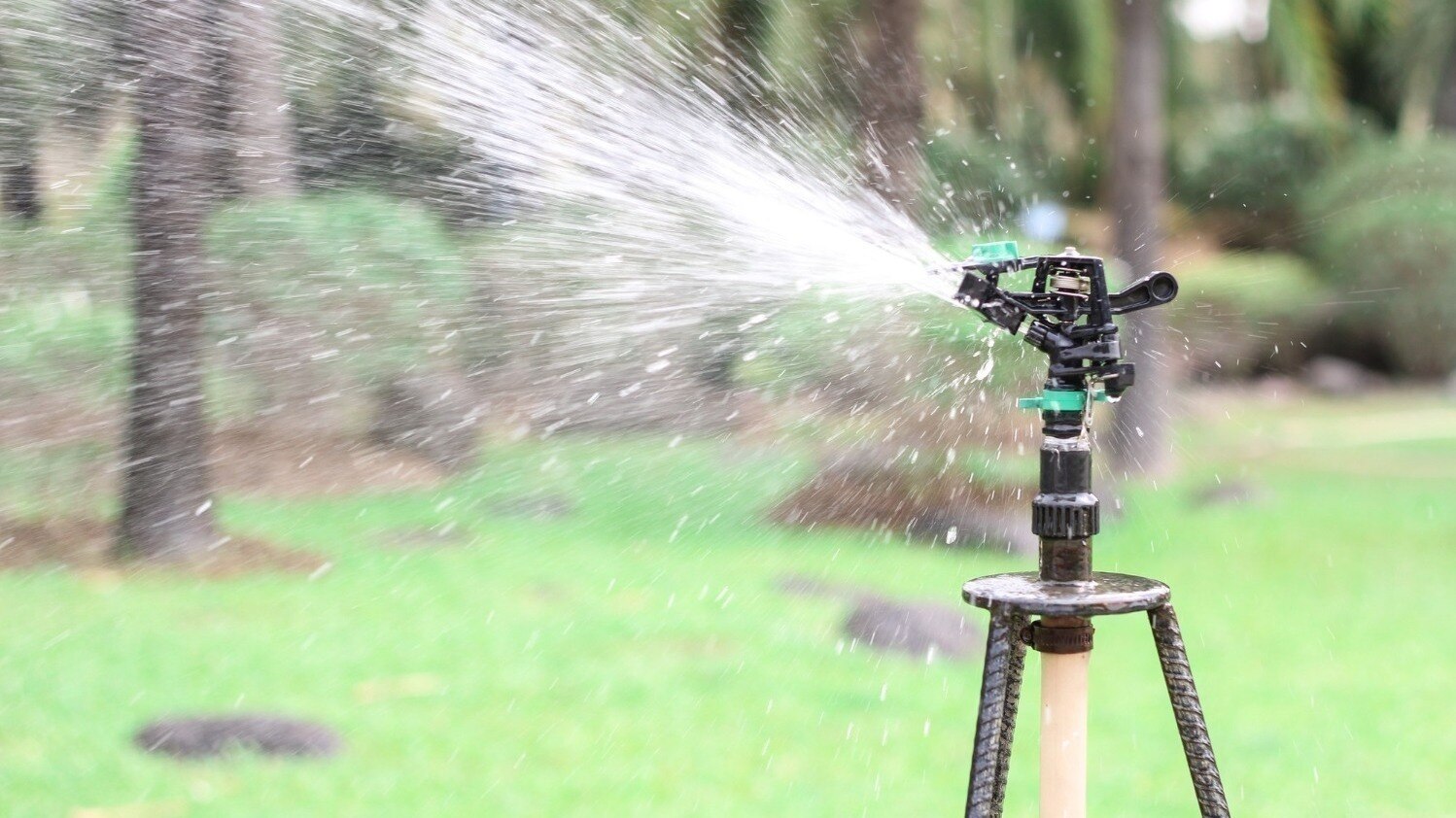
An overhead sprinkler is the wrong default for office bonsai: it wets leaves, desks, flooring and nearby electronics while missing soil beneath crowded foliage. Choose low-flow root-zone irrigation instead, with one adjustable emitter or microtube outlet secured at each pot.
| Format | Water delivery | Best use | Main drawback |
|---|---|---|---|
| Drip emitter and microtube | Metered water at each pot | Mixed bonsai collections needing contained, even dosing | Blocked emitters require inspection |
| Capillary mat or wick | Water rises from a shared reservoir through the pot base | Small displays with matching pots and absorbent substrates | Uneven contact creates uneven wetting |
| Micro-sprayer | Fine spray over several pots | Outdoor or open, splash-tolerant areas | Wets foliage and surrounding surfaces |
| Misting head | Brief droplets on leaves and air | Humidity experiments, not root watering | Does not reliably wet the root ball |
| Timer-controlled hand watering | A person applies water on schedule | Small displays where staff can check drainage | Inconsistent dose and missed sessions |
For automatic bonsai watering, control substrate moisture and drainage, not a target room-humidity reading. Air-conditioning can dry the pot surface, but misting leaves does not replace water at the roots.
Use filtered, pressure-regulated lines and drip trays with a clear route to a drain; otherwise a loose tube can turn an office display into a flooring leak. Specify bright-window or grow-light conditions when ordering, because automation cannot correct insufficient light.
Calculate the dose for each bonsai pot, then set the timer
Start with pot capacity in litres and a measured dose, not a daily timer. Use this calculation: water delivered in litres = emitter flow in litres per hour × run time in hours. A 2 L/hour emitter running for 3 minutes supplies about 0.1 litre before line losses.
| Pot capacity | Starting emitter | Starting dose and run time |
|---|---|---|
| 0.3–0.7 L | 1 L/hour | 50–100 mL; 3–6 minutes |
| 0.8–1.5 L | 1 L/hour | 100–200 mL; 6–12 minutes |
| 1.6–3 L | 2 L/hour | 200–400 mL; 6–12 minutes |
Use the upper end for coarse, fast-draining akadama, pumice or bark mixes. Use the lower end for fine mixes containing peat or cocopeat.
Confirm the dose by catching water from the emitter, then run the system until the root ball is wet and a small amount drains from the pot; reduce the dose if water runs through immediately.
Set the first interval from moisture checks, not the calendar. For office bonsai plants in Pune, test every 1–2 days in bright light with warm airflow, every 3–5 days in moderate light, and every 5–10 days in low light or a cool air-conditioned room.
Check a skewer inserted halfway into the root ball and lift the pot before each cycle. Automatic bonsai watering should pause when the root zone remains damp. Recheck after a week of actual office conditions.
Adjust watering for Pune heat, monsoon humidity and air-conditioning
Divide the controller into separate zones before setting a seasonal schedule. A single interval fails when office bonsai plants in Pune include thirsty species, drought-tolerant species and plants beside a bright window or air-conditioner outlet.
| Zone | Plants and conditions | Schedule response |
|---|---|---|
| High demand | Tropical species, small pots, coarse substrate, bright light or recent root pruning | Check moisture daily; shorten the interval during hot, dry weather |
| Moderate demand | Bonsai in filtered light, medium pots and balanced substrate | Start with the commissioned interval; extend it when the top layer remains damp |
| Low demand | Drought-tolerant species, shaded plants or fine, moisture-retaining substrate | Use a longer interval and a smaller dose; never water by the high-demand zone’s setting |
| Air-conditioned | Pots exposed to moving air or cool, dry airflow | Inspect pot moisture rather than increasing watering automatically; shield the outlet if foliage dries |
For Pune’s hot season, increase frequency only after a root-zone check shows faster drying. During monsoon humidity, reduce frequency or pause a cycle when drainage remains slow. Programme a separate closed-office setting for weekends and holidays, with a visible low-water or controller-failure alarm.
Do not use misting to correct dry roots. For pre bonsai plants for offices, obtain the species, pot size, substrate, light requirement and recent repotting date; a nursery-grown plant moved into dim office light may use less water while suffering leaf drop. Recheck each zone after relocation or a lighting change.
Commission the system with drainage, moisture checks and leak controls
Commissioning is complete only when each bonsai shows root-ball wetting and no water escapes the irrigation zone. Run automatic bonsai watering with every pot in its normal position, then remove the saucers and confirm that water drains from each pot’s bottom holes.
A dry surface alone proves nothing: shallow repeated doses can leave the centre or lower roots dry.
Use this acceptance checklist:
- Collect one emitter’s output in a measuring cup for 60 seconds and compare it with its rated flow; repeat at the farthest pot to expose pressure loss.
- Mark each pot that produces drainage, then inspect any missing mark for a blocked emitter, kinked microtube, clogged filter or sealed drainage hole.
- Check moisture at the pot edge and near the root mass with a probe, while also lifting selected pots before and after watering; one sensor cannot represent mixed pot sizes or substrates.
- Empty every saucer and tray after drainage. Recheck the next morning; persistently saturated soil or standing water indicates waterlogging, not successful irrigation.
- Run the system while the office is occupied, inspect pipe joints, reservoir fittings and trays, and place a visible leak alarm beneath vulnerable connections.
- Test the low-reservoir, power-failure and controller-failure alerts, then record a manual watering override.
Repeat these checks during Pune’s hot-dry period, monsoon humidity and office closures. Set a named inspection task rather than trusting a fixed timer or a single moisture reading.
Specify the installation and plant information before you buy
Require a written plant-and-installation schedule from any bonsai plant supplier in Pune; a quoted plant count cannot show whether the display will survive its office conditions. Give the supplier each display’s window or grow-light position, air-conditioning exposure, pot location and drainage route.
1. Request a plant sheet for every pre-bonsai plants for offices: species, pot dimensions, substrate composition, drainage-hole size, recent repotting or root-pruning date, light requirement, expected watering range and acclimatization plan. Nursery-grown plants can drop leaves after a sudden move into low office light.
2. Ask for a water test covering electrical conductivity, pH, alkalinity and visible sediment. Use the results to choose filtration and avoid setting fertilizer strength before you know whether dissolved salts will accumulate.
3. Require the automatic water sprinkler for garden bonsai offices in Pune to specify low-flow drip or microtube emitter type, nominal flow, filter and pressure requirements, maximum pots per zone, drainage provision and the number of independently controlled zones. Separate high-demand or recently repotted plants from drought-tolerant bonsai and brighter, warmer window displays.
4. Put controller battery backup, installation warranty, leak responsibility and seasonal recalibration in writing. Name the person who will retest emitters after Pune’s monsoon and summer changes.
New Garden Guru Farms & Nursery can be asked to match its bonsai and pre-bonsai stock to this plant sheet rather than supplying identical plants for every office position.
Frequently asked questions
Why is root-zone irrigation better than an overhead sprinkler for office bonsai?
It delivers water beneath the foliage, reducing wet leaves, splashes on desks and floors, and missed soil beneath dense canopies.
How do you calculate the watering dose for each bonsai pot?
Measure how much water reaches the pot, inspect drainage, and adjust the emitter and timer until the root zone is watered without persistent standing water.
How should office bonsai watering change in Pune’s heat, monsoon and air-conditioned rooms?
Increase checks during hot dry periods, reduce frequency when monsoon humidity slows drying, and inspect pots near air-conditioning vents because airflow changes moisture loss.
What should you check when commissioning an automatic bonsai watering system?
Confirm drainage, test soil moisture after a cycle, inspect every connection for leaks, and run the system while someone can correct blocked or misplaced outlets.