Mumbai retailers need bonsai species that can withstand heat, humidity, monsoon moisture, coastal air and the abrupt shift between nursery, shop floor and customer home. By comparing climate fit, training stage, stock quality, seasonal risk and retail demand, you can build an assortment that is easier to handle and less likely to generate losses.
Key takeaways
- Prioritise tropical bonsai species over temperate varieties for Mumbai’s warmth and humidity.
- Use finished bonsai for premium sales and pre-bonsai plants for lower entry prices.
- Reject lots with pests, root rot, weak trunks, or inconsistent plant sizes.
- Schedule major buying and dispatch before heavy monsoon conditions disrupt transport.
Rank bonsai species by Mumbai climate fit and care difficulty
For the best plants and nursery bonsai choices in Mumbai, rank tropical species above temperate ones. They handle warmth, humidity and imperfect retail care better, while still offering strong trunk shapes and familiar customer appeal.
| Rank | Species | Mumbai fit and care difficulty | Retail judgement |
|---|---|---|---|
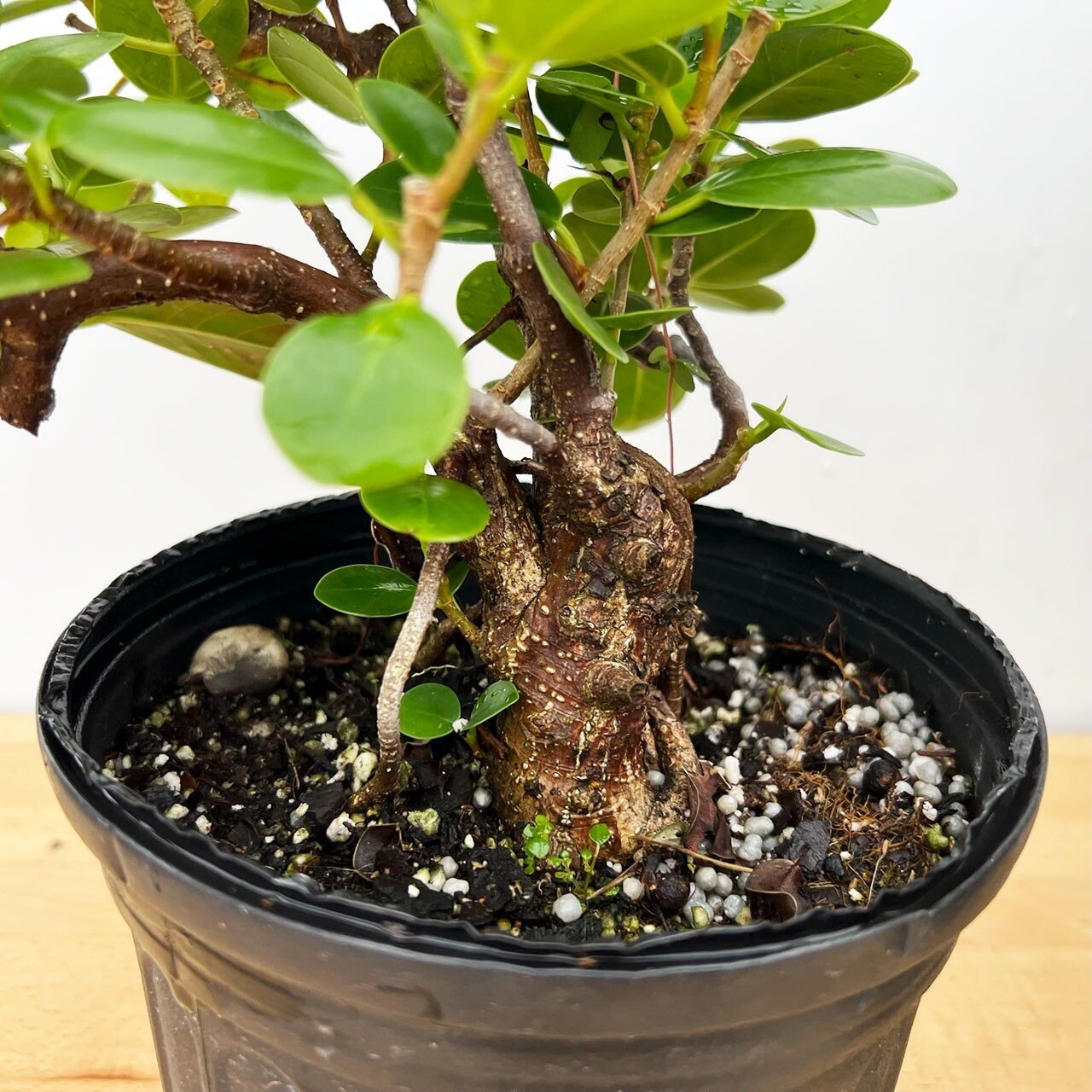
| 1 | Ficus microcarpa | Excellent fit; easy recovery after pruning and transport. Needs very bright light, even when sold as an indoor bonsai. | Safest core stock and one of the most forgiving bonsai plants for retailers. |
| 2 | Portulacaria afra | Excellent fit; low water demand, but requires strong light and sharply draining soil. | Good for beginners and low-maintenance displays; avoid wet monsoon benches. |
| 3 | Bougainvillea | Very good fit; vigorous in heat and sun, with flowering appeal. Needs careful watering and regular pruning. | High visual impact, but sell it for bright outdoor positions. |
| 4 | Wrightia religiosa | Very good fit; responds well to pruning and suits humid warmth. Needs consistent moisture without saturated roots. | Attractive fine foliage and manageable care for informed buyers. |
| 5 | Tamarindus indica | Good fit; tolerates heat and develops character, but needs strong light and more training time. | Distinctive mid-range choice rather than fast-turnover stock. |
| 6 | Punica granatum | Fair fit; appealing bark and flowers, but demands bright light and seasonal pruning. | Sell selectively, with clear aftercare instructions. |
Avoid making Juniper or Japanese maple mass-market lines. Mumbai does not provide reliable cool dormancy, and heat plus humidity can trigger decline. During the monsoon, grade every plant by drainage, root-ball condition and clean foliage, not lushness alone. A thick trunk, visible taper and sound nebari matter more than a fashionable pot shape.
Choose between finished bonsai, pre-bonsai and lower-cost alternatives
A finished bonsai gives you immediate shelf appeal, but a cheaper pre-bonsai can produce better margins when its trunk and branch structure justify the training work. Compare development, labour and sell-through value rather than choosing by age, height or pot shape alone.
| Option | Development | Labour before sale | Selling potential |
|---|---|---|---|
| Finished bonsai | Defined trunk, nebari, branches and styling | Light maintenance, presentation and care instructions | Highest immediate price; suits gift buyers and beginners |
| Pre-bonsai | Developing taper, roots and primary branches | Pruning, wiring, repotting and recovery time | Strong margin for hobbyists who value future shaping |
| Young starter plant | Thin trunk and limited structure | Years of growing, selection and customer education | Lowest price; useful for entry-level volume |
For pre-bonsai plants in Mumbai, grade the trunk base, taper, nebari, root health and lower-branch placement first. A thick, flare-forming trunk with usable branches can outperform an older styled tree with a thin trunk and no room for improvement.
Ask for the species and cultivar, trunk diameter measured at a stated height, overall height, pot size, root-ball condition, last repotting date, pruning and wiring status, sun requirement, dispatch hardening and replacement terms. Request whether each plant was field-grown, grow-bag-grown or container-grown; recently dug stock needs recovery before heavy root reduction or a small pot.
For bonsai plants for retailers, transport damage can erase a price advantage. Reject or reprice lots with loose root balls, broken feeder roots, wire scars, trunk wounds, scorch or pests. Ficus microcarpa offers forgiving retail stock, but it still needs bright light; Bougainvillea needs full sun and sharp drainage, not an indoor shelf.
Inspect every wholesale lot before accepting delivery
A low price does not make a bonsai lot good value if transport reveals weak roots, trunk wounds or poor future structure. For a bonsai wholesale nursery in Mumbai, judge pre-bonsai plants in Mumbai by development potential before judging the current pot or canopy.
Ask the supplier to state these specifications on the invoice or lot sheet:
1. Record species or cultivar, overall height, pot diameter, and trunk diameter measured 5 cm above the soil. A thick, tapering trunk with visible flare can justify a higher price than a taller tree with a thin, straight stem.
2. Inspect the nebari for roots spreading evenly from the trunk. Reject exposed circling roots, a loose root ball, sour-smelling media, black mushy roots, or fresh cuts that have not healed.
3. Check branch placement: useful low branches, alternating branch positions and a clear leader offer styling options. A recently wired canopy with wire biting into bark has already incurred retailer risk.
4. Examine leaves and stems for scale, mealybug, webbing, fungal spots, sun scorch and soft, stretched growth. Isolate suspect lots rather than mixing pests with your saleable stock.
5. Ask for the last repotting date, pruning and wiring date, media composition, dispatch hardening period, sun requirement and replacement terms. Ask how the lot was watered during monsoon weeks.
New Garden Guru Farms & Nursery can be compared fairly with another supplier only when both provide those measurements and aftercare details; a photograph cannot reveal root stability or hidden wire damage.
Related product
 | Plants Welcome to our collection of exquisite Bonsai and Pre-Bonsai trees. View product → |
Time buying, pruning and dispatch around Mumbai’s monsoon
Source tropical bonsai during active warm growth, but avoid major root work immediately before or during saturated monsoon spells. Seasonal bonsai buying in Mumbai works best when you confirm an established, non-saturated root ball, free-draining media and clean foliage rather than choosing the lushest-looking plants.
- Repot healthy tropical stock before the heaviest rains or during a warm growth flush, when you can control drainage and aftercare. Delay repotting trees already sitting in wet media.
- Do structural pruning before monsoon humidity peaks. During rapid growth, use light corrective pruning and remove damaged foliage promptly; dense canopies trap moisture and encourage fungal problems.
- Wire after branches have dried and inspect frequently during warm growth. Fast thickening causes wire bite, especially on newly wired trees.
- Dispatch early in the day, never with a dripping root ball. Use ventilated protection, secure the pot, and postpone collection during intense rain or flooding.
Time flowering bonsai around their natural flowering flush, not simply the retailer’s preferred delivery date. A tree bought in bloom can drop flowers after transport or a sudden change in light.
For Portulacaria afra, protect against monsoon waterlogging and shaded, weak growth; its drought tolerance does not make constantly wet media safe. Raise pots on feet or benches, keep drainage holes clear, and hold stock under rain protection until the root ball regains an even moisture level.
Build a retail assortment around size, light and customer skill
Put entry-level stock where customers can see it easily, but reserve premium bonsai for buyers who understand aftercare. The best plants and nursery bonsai choices in Mumbai combine bright light, reliable drainage and recovery after handling; a low-light shelf will defeat even a hardy species.
| Band | Suitable stock and shelf condition | Buyer ability and turnover |
|---|---|---|
| Entry | Ficus microcarpa or Portulacaria afra in small pots; place near a bright window or under strong grow lights | Beginners; lower price band and faster turnover |
| Mid-range | Bougainvillea or Wrightia religiosa with visible trunk structure; use an outdoor-sun or very bright display | Buyers wanting flowers; moderate care and seasonal turnover |
| Development | Pre-bonsai with thick trunk bases, taper, sound nebari and usable branches; display outdoors or in high light | Hands-on buyers; lower immediate turnover but good development value |
| Premium | Fully trained, proportionate specimens in finished pots; protect from air-conditioning drafts and sudden light changes | Experienced buyers; higher price band and slower, consultative sales |
Separate watering zones by need. Ficus needs regular checks, while Portulacaria should dry partly between waterings; mixing them on one automated line creates root-rot losses or drought stress. Never market either as a permanently indoor plant: weak light causes Ficus leaf drop and elongated growth, while Portulacaria loses compact form.
- Species, pot size, light requirement and watering cue
- Trunk diameter measured at a fixed height, plus overall height
- Training stage, last repotting date and any wire marks
- A simple care band: beginner, attentive or specialist
Reserve a small premium section for higher-value stock instead of filling every shelf with slow-selling finished trees.
Frequently asked questions
Which bonsai species suit Mumbai’s climate best?
Tropical species such as ficus, jade and bougainvillea handle Mumbai’s warmth and humidity better than temperate bonsai, which need stricter seasonal care.
Should retailers buy finished bonsai or pre-bonsai plants?
Buy finished bonsai for customers seeking immediate display plants. Choose pre-bonsai plants when lower prices, future shaping and broader stock quantities matter more.
What should retailers inspect in a wholesale bonsai lot?
Check roots, trunk structure, foliage, pests, fungal damage, pot stability, moisture and uniformity before accepting delivery.
When should Mumbai retailers buy and dispatch bonsai?
Plan major purchases and dispatches before peak monsoon rains. Protect loads from waterlogging, prolonged wet foliage and transport delays during heavy rain.