Bonsai containers dry faster than garden soil, while Pune’s monsoon can leave foliage and shallow media wet for too long. You will be able to match irrigation equipment to pot size, substrate, species and nursery layout, then test and adjust the system instead of trusting a fixed timer.
Key takeaways
- Test pot moisture before automating any bonsai watering.
- Separate shallow, deep and newly repotted pots into different zones.
- Use shorter cycles and check runoff during Pune’s monsoon.
- Keep a hand-watering backup for blocked emitters, outages and travel.
Match the irrigation method to Pune’s climate and bonsai risks
Hand watering suits bonsai plants in Pune when you have a few indoor trees, highly variable species, newly repotted plants or pots needing individual decisions. A garden sprinkler system for bonsai and pre-bonsai in Pune becomes useful for larger, uniform batches, but only after testing actual pot moisture.
| Option | Water use | Labour and installation | Disease and failure risk |
|---|---|---|---|
| Hand watering | Low to moderate; targeted | Highest labour; no installation | Lowest when you avoid wet foliage |
| Watering cans | Moderate; controlled but slower | High labour; simple | Low; spilled water can erode media |
| Hose wands | Moderate; fast and directed | Medium labour; simple | Low to medium; pressure can disturb media |
| Overhead sprinklers | High; wets foliage and benches | Low labour; simple to medium | High if bark stays wet overnight |
| Micro-sprinklers | Moderate; efficient for batches | Low labour; medium installation | Medium; wind and overlap affect coverage |
| Short-range spray stakes | Moderate; localised coverage | Low labour; medium installation | Medium; blocked stakes create dry pots |
| Drip emitters | Low; root-zone delivery | Low labour; highest maintenance | Low foliage risk; clogging causes hidden drought |
| Misting systems | Very low root-zone delivery | Medium installation and frequent checks | High if used on established trees |
| Capillary mats | Low to moderate; continuous supply | Low daily labour; medium setup | High if constantly wet or poorly drained |
Hot, dry periods rapidly empty shallow containers, while southwest monsoon rain and humidity can leave them saturated. Overhead irrigation wets dense pre-bonsai quickly but not evenly: akadama, pumice, cocopeat and bark respond differently, foliage stains, bark stays wet, and soil washes onto benches.
Misting belongs in propagation beds and for cuttings, not as primary irrigation for established trees.
Design zones, outlets and run times for different pots
Size each zone by container size, substrate and water demand, not by bench location alone. A sprinkler system for bonsai should separate shallow training pots, large nursery bags, established bonsai, recently repotted trees, evenly moist species, and species that need drying between waterings.
Recently repotted trees need shorter, monitored cycles; drying-tolerant species should not share a fixed timer with moisture-loving stock.
| Spray type | Pune wind behaviour | Layout guidance |
|---|---|---|
| Coarse-droplet, low-angle micro-sprinkler | Less drift and evaporation | Overlap spray patterns across the bench; check edges |
| Fine spray | More drift, foliage wetting and uneven delivery | Use only with shelter, close spacing and verified coverage |
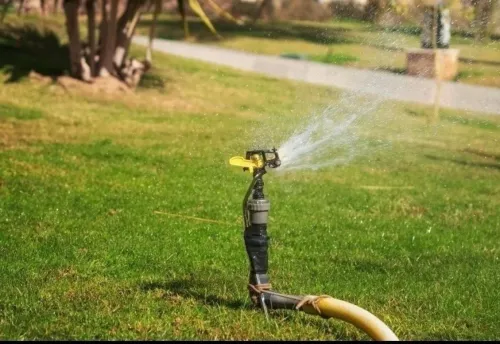
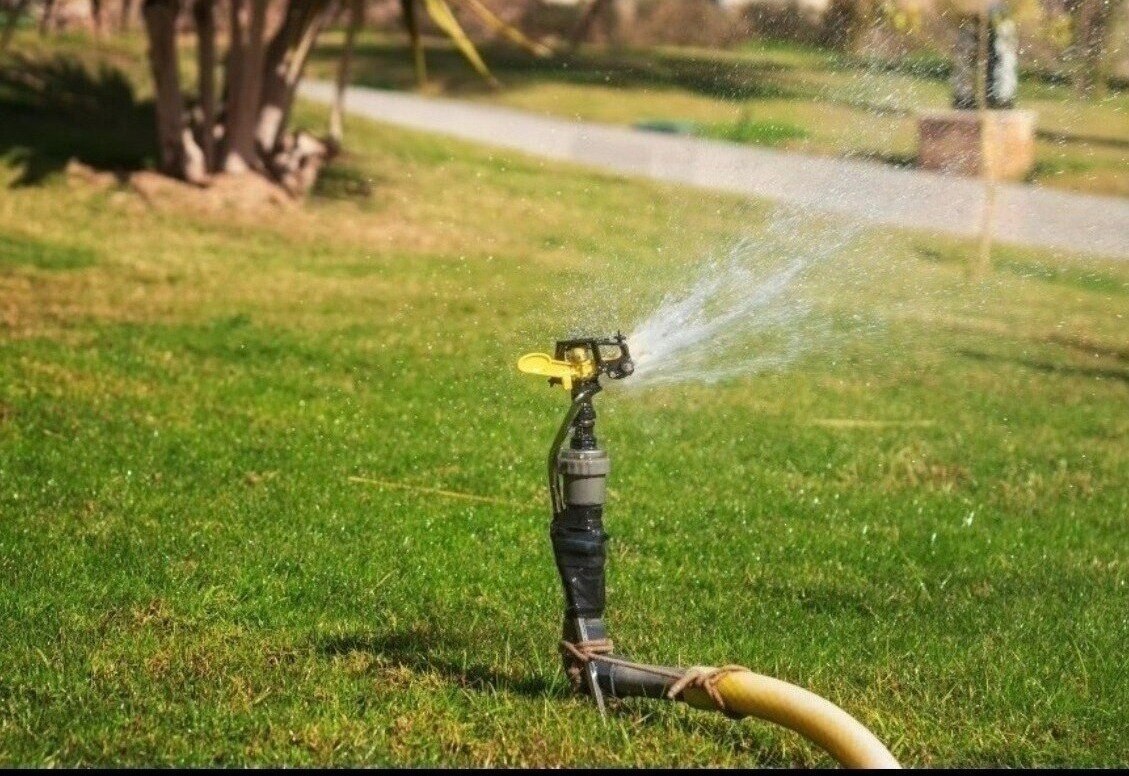
Choose spacing from the actual spray radius at operating pressure, not the catalogue maximum. Too little overlap leaves dry edges; too much creates pooling beneath the centre. For individual pots, place a drip outlet or spray stake over the root zone, away from the trunk, pot wall, foliage, rim and floor.
Use two discharge points for valuable trees or uneven media.
Measure output: millimetres per hour ≈ litres per minute × 60 ÷ irrigated square metres. Forty outlets at 2 litres per hour deliver 80 litres per hour, or 1.33 litres per minute; over 10 square metres that is about 8 millimetres per hour, so 20 minutes applies about 2.7 millimetres.
Measure outlet flow, because pump ratings rarely equal pressure and discharge at the furthest pot.
Lift representative pots and check moisture at the top, middle and lower depth. Insert a wooden probe carefully, then inspect drainage; do not trust a fixed timer for pre-bonsai plants in Pune.
Build a reliable layout and verify water quality and distribution
A reliable garden sprinkler system for bonsai and pre bonsai in Pune starts at the water source, not the timer. Before buying equipment, check tap pressure, pump capacity at the furthest outlet, elevation, pipe friction, electrical supply, drainage and the number of outlets that will run simultaneously.
1. Trace the water path: tank or tap, pump, timer, filter, pressure regulator, non-return valve, mainline tubing, microtubing, stakes, outlets and end caps. Size the pump for the required pressure at the furthest outlet, not total flow alone. Leave spare mainline capacity for moved pots, added benches and expanding pre-bonsai stock.
2. Protect small emitters from sediment, algae, fertiliser residue and mineral deposits. A 120-mesh filter is a common starting point for micro-irrigation, but the emitter manufacturer’s minimum filtration requirement controls. Clean the filter and flush mains and laterals routinely; Pune nursery water also warrants tests for electrical conductivity, pH, alkalinity and sodium.
Periodically leach salts with low-salinity water only when containers drain freely.
3. Accept the layout with catch cups at the centre, edges and beneath representative foliage. Compare collected depths, then calculate low-quarter distribution uniformity: the average depth from the lowest quarter of cups divided by the overall average. Poor edge results mean droughted pots despite adequate average flow.
4. Lift representative pots after testing and inspect drainage. A bonsai nursery in Pune needs this verification before trusting automation, especially under dense foliage or uneven benches.
Operate the system through monsoon, travel and failures
Run separate dry-season and monsoon programmes for bonsai plants in Pune. Start irrigation early enough to avoid peak heat, then change run time only after lifting representative pots and checking moisture at the top, middle and lower layers.
A rain shut-off alone is unreliable: rain can wet foliage while sheltered containers remain dry. During prolonged rain, pause automatic irrigation, inspect drainage, and restart only after representative pots have begun to dry.
- Fit a manual bypass and an independent hose point for power cuts, timer faults, pump failure, newly repotted trees and unusually thirsty stock.
- Protect the pump with a float switch or low-level cut-out so an empty tank does not run it dry.
- Give a neighbour a simple routine: confirm tank level, check one outlet in each zone, inspect runoff and hand-water visibly dry pots.
- Never compensate for a failed zone by flooding another; repair the sprinkler system for bonsai first.
| Symptom | Check and correction |
|---|---|
| Dry patches | Clear blocked or displaced outlets; test pressure and overlap. |
| Pooling | Reduce run time; loosen compacted media and clear blocked drainage. |
| Overspray | Shield wind or reset the outlet radius. |
| Leaking joints | Replace the connector rather than tightening a damaged fitting. |
| Timer error | Check the battery, programme and valve operation. |
| Algae | Exclude light from the tank and lines, then flush and clean them. |
On terraces and balconies, secure tubing, prevent slippery runoff, protect waterproofing and stop water reaching neighbouring property.
Choose between sprinkler, drip and hand watering by total workload
Choose by total labour, not equipment price: automation earns its cost when the minutes saved each day exceed installation, monitoring and maintenance time over the season.
| Option | Best fit | Labour and upkeep |
|---|---|---|
| Overhead micro-sprinklers | Dense batches of pre-bonsai plants in Pune | Fast installation and coverage; higher water use, daily checks for uneven pots, blocked nozzles and overspray; clean filters and inspect seasonal spacing. |
| Targeted drip | Individually spaced trees | Longer installation with tubing and emitters; lower water consumption and less foliage wetting; replace blocked or displaced emitters and clean filters. |
| Hand watering | Small, high-variation collections | No installation or filter cleaning; highest daily labour, but best judgement for changing needs. |
A sprinkler system for bonsai should not run as one block. Ask for a layout based on pot count, bench dimensions, sunlight exposure, drainage, water source, tank and pump capacity, available pressure and future expansion. Require measured flow rate, pressure at the furthest outlet, filter specification, zone plan and maintenance instructions.
A bonsai nursery in Pune still needs a manual bypass or hose point for newly collected, newly repotted or unusually thirsty material. New Garden Guru Farms & Nursery can help coordinate stock, pots, benches and irrigation components, but verify those design details before buying.
Use targeted drip for variable individual pots, low-angle micro-sprinklers for tested batches, and hand watering when plant-by-plant judgement outweighs automation.
Related product
 | Plants Welcome to our collection of exquisite Bonsai and Pre-Bonsai trees. View product → |
Frequently asked questions
Which irrigation method suits bonsai plants in Pune?
Hand watering suits small collections and pots needing individual decisions. Drip suits targeted watering for mixed layouts, while micro-sprinklers suit larger, uniform batches after coverage testing.
How should you design irrigation zones for bonsai and pre-bonsai plants?
Group pots by size, substrate, exposure and water demand. Keep shallow pots, deep training containers and newly repotted plants on separate outlets or run-time zones.
How do you verify a sprinkler system for bonsai?
Run the system, place catch cups across the layout, compare collected water, inspect runoff and check moisture at several pot depths. Correct blocked nozzles, overspray and dry areas before relying on automation.
How should you operate bonsai irrigation during Pune’s monsoon and travel?
Reduce or pause scheduled watering after rainfall, inspect drainage and adjust by actual pot moisture. Before travel, test timers, filters and emitters, then arrange a manual backup for failures.